
NASA's Unsung Heroes: How Ground Crews Keep Flight Research Soaring
Ever wonder who makes sure NASA's high-flying research planes are ready to chase storms or test new tech? It's not just the pilots.
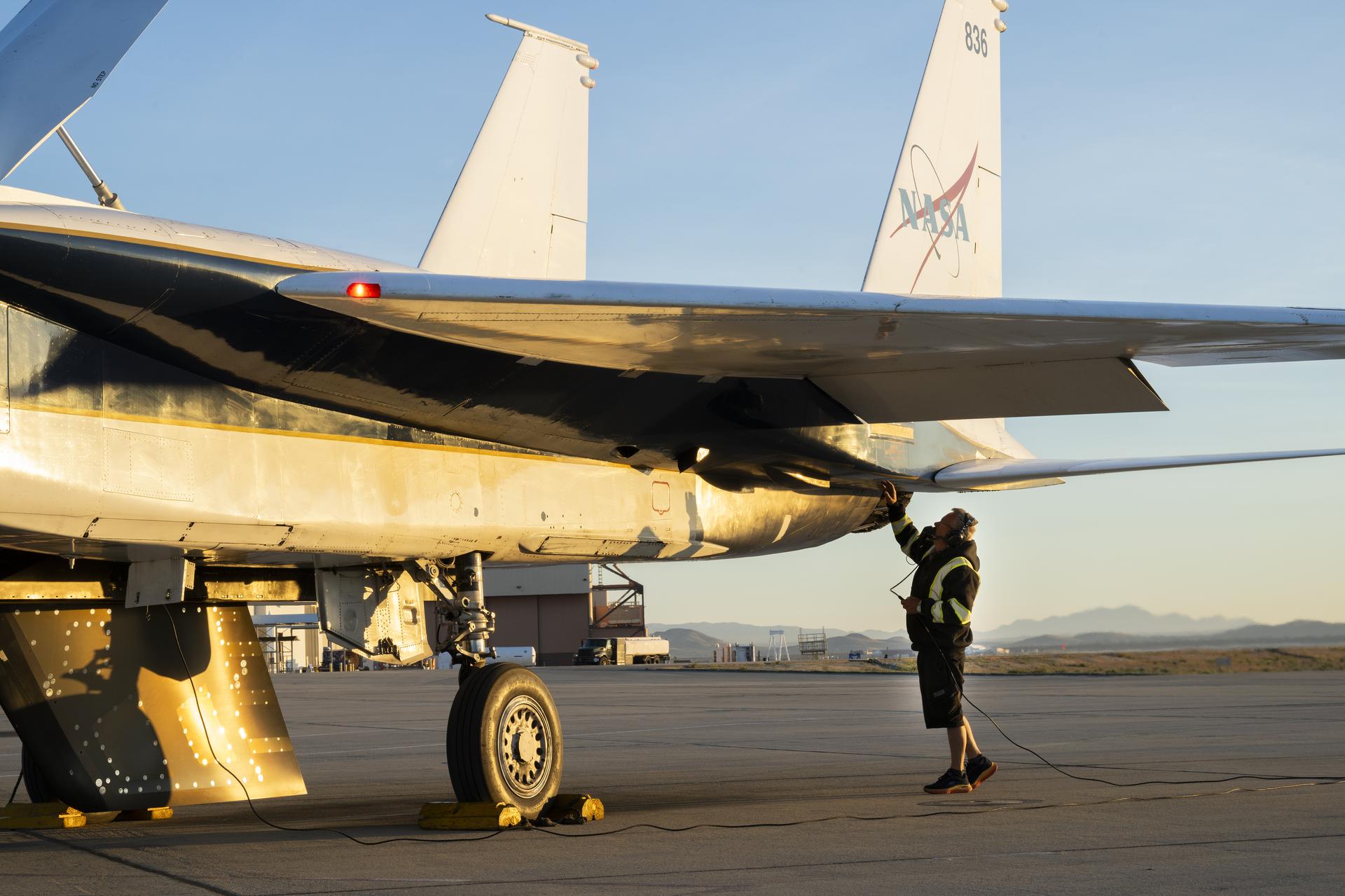
NASA's groundbreaking aeronautics research and high-altitude science missions rely on more than just skilled pilots and cutting-edge technology. Behind every successful flight is a team of dedicated ground crews ensuring the agency's aircraft are mission-ready. These are the unsung heroes of flight research, the grease-stained guardians of the skies.

At NASA’s Armstrong Flight Research Center in Edwards, California, these specially trained maintenance crews are the backbone of the agency’s airborne operations, meticulously maintaining and preparing a diverse fleet of aircraft for demanding missions. From the high-flying ER-2s to the revolutionary X-59, each aircraft requires specialized care and attention. Ever thought about what it takes to keep a one-of-a-kind experimental aircraft like the X-59 in the air? According to industry analysis, the level of precision required is akin to maintaining a Formula 1 race car, but with the added complexity of flight systems.
The Mission-Critical Role of Ground Crews
Each aircraft plays a unique role, from conducting scientific research to providing crucial support during rocket launches. These varied missions demand agility and expertise from the maintenance crews, who must adapt to fast-paced changes and specialized hardware requirements. This is particularly critical now, as NASA ramps up its Artemis program and relies on airborne platforms for crucial data gathering.
To guarantee the safety and success of NASA's aeronautics and science endeavors, ground crews perform continuous checks and maintenance. These tasks are crucial, as constant flight can degrade even the most robust components. What kind of checks, you ask?
- Inspecting and maintaining ejection seats
- Refueling aircraft
- Replacing brakes, wheels, and wiring
- Upgrading hardware
Expanding the Fleet, Expanding the Expertise
This year, NASA added two F-15s and a Pilatus PC-12 to its Armstrong fleet, further diversifying its capabilities. This expansion demands a highly adaptable maintenance staff capable of handling a wide range of aircraft systems and mission requirements.
“That’s the beauty of our Armstrong maintenance teams. They adapt to any type of change,” said Jose “Manny” Rodriguez, NASA Armstrong Gulfstream G-IV crew chief. “One day you could have an instrument being loaded, and the next day it may be aircraft reconfiguration, all while other aircraft systems may need fixing. They adapt and they overcome any situation.” That's some serious adaptability.
A Day in the Life: Ensuring Flight Readiness
On any given day, a NASA Armstrong aircraft might be flight-ready, undergoing scheduled maintenance, or receiving long-term repairs. With multiple aircraft often in the air simultaneously – such as the C-20A in Peru and Panama, the X-59 conducting daily test flights, and the ER-2 supporting the Geological Earth Mapping Experiment (GEMx) in Colorado – the maintenance staff is constantly working to keep the fleet operational. From a professional standpoint, managing this level of simultaneous activity requires meticulous coordination and resource allocation.
The Anatomy of a Maintenance Crew
NASA's maintenance crews comprise individuals with diverse backgrounds, including both military and civilian experience. On-the-job training is a critical component of their development, ensuring they possess the skills necessary to maintain NASA's complex aircraft.
A typical maintenance crew includes:
- Crew Chief: The person in charge of the aircraft's overall maintenance.
- Avionics Technician: A specialist in navigation, communication, and flight control systems.
- Quality Assurance Personnel: Oversee and ensure the quality of all maintenance work.
- Mechanics: Perform a variety of maintenance and repair tasks.
The Final Check: A Signature of Safety
Once the maintenance crew has completed its work, the aircraft is towed to the flightline, where it undergoes a final safety check. The NASA pilot and the assigned crew chief conduct a walk-around inspection before each flight, ensuring everything is in optimal condition.
“There is a crew chief assigned to every aircraft,” Rodriguez said. “The crew chief is responsible for the integrity of that aircraft, and at the end of the day, his signature and the pilot’s together are what constitutes that the aircraft is safe for flight.” It all comes down to trust and expertise.
Ready for Anything: Supporting Every Mission
Maintenance crews diligently track each flight, prepared to respond if an aircraft returns to base early. Upon landing, the crew is immediately on hand to assist the research team, address any issues, and prepare the aircraft for its next mission. While this holds for most situations, unexpected issues can still arise that require creative problem-solving. Real talk, have *you* ever tried fixing something mid-mission?
“It’s difficult at times to work with different airplanes from both the civilian and military sides, but it’s very rewarding to see that we have the capability and the expertise to keep these aircraft flying,” Rodriguez said. So, next time you see a NASA plane soaring, remember the dedicated ground crews who made it possible (they're kinda a big deal).